
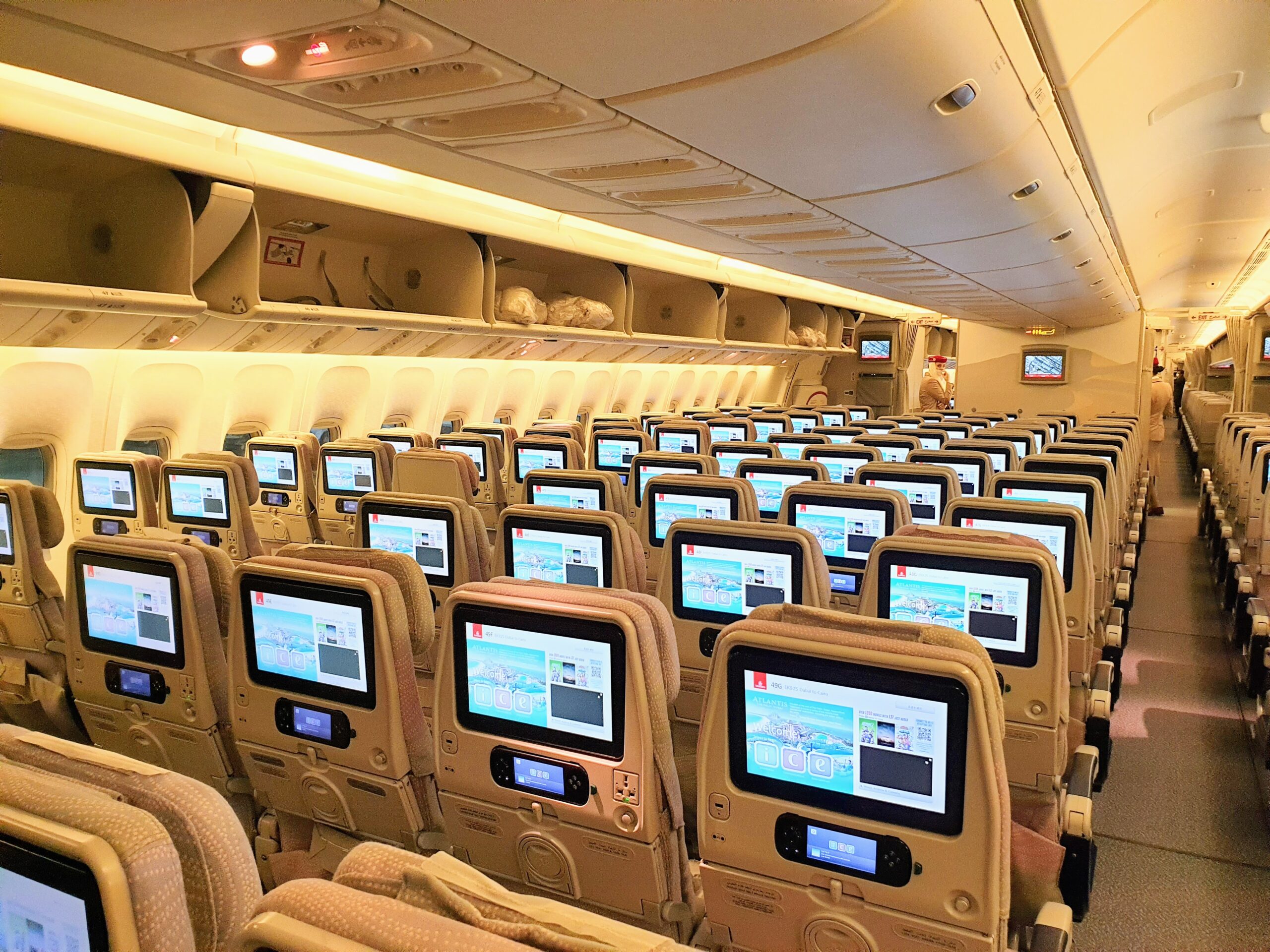
From May 2008 to September 2026, I flew as Emirates cabin crew out of Dubai. For 18 years, travelling wasn’t a holiday; it was simply part of my life.
2,373 flights, 15,846 hours in the air, and enough miles to circle the Earth 312 times.
Along the way, I packed and unpacked my suitcase more times than I can count, woke up in a different time zone every few days, and learned, sometimes the hard way, what makes a flight easier.
From the other side of the trolley, I also watched thousands of passengers board tired and land exhausted, while a lucky few stepped off looking fresh. The difference was rarely the cabin class. It was a handful of small habits.
So here they are: 18 tips, one for every year I spent in the air.
Before You Fly
1. Choose your seat like crew would
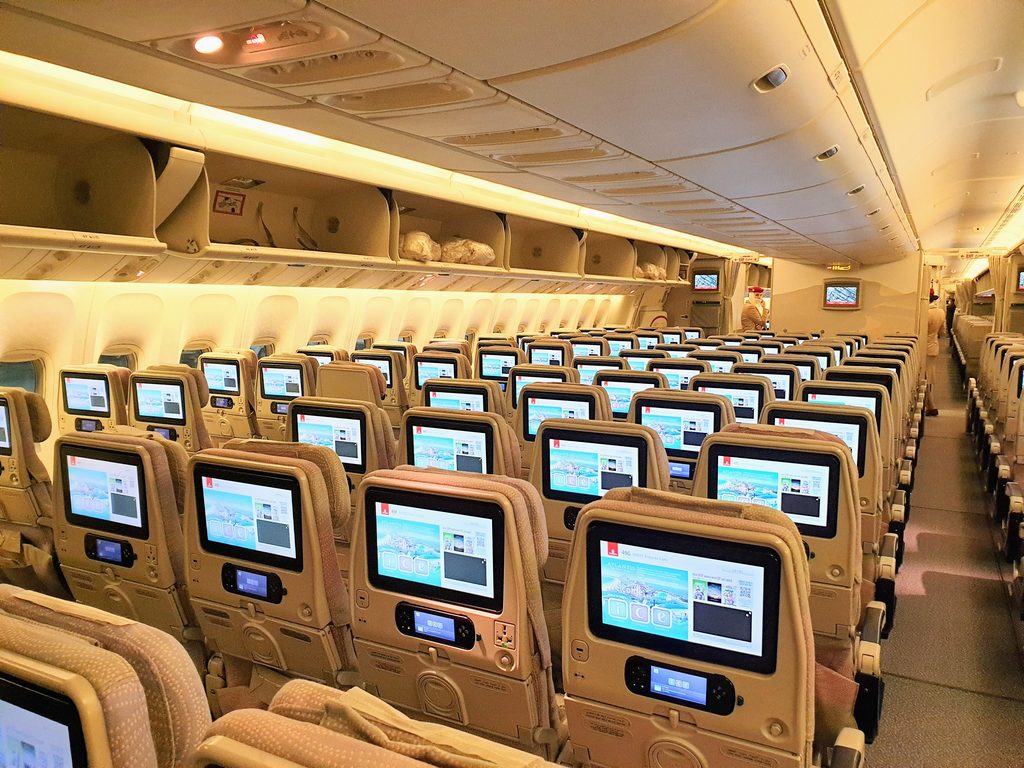
Check the seat map before you pick. Light sleepers should avoid rows next to the galleys and lavatories, where crew and passengers move all night. Window seats are best for sleeping; aisle seats suit anyone who likes to get up and stretch.
These days, bulkhead and exit rows are usually sold as paid extra-legroom seats. Are they worth it? If you’re tall, around 180 cm (5’11”) or more, don’t hesitate. Buy it. Your knees will thank you by hour six.
If you’re not, think twice. The armrests don’t lift, because the tray table and screen are stored inside them. You can’t keep a bag at your feet, and the screen must be stowed for take-off and landing, so no movies then.
Bulkhead rows are also where bassinets go, so you may be sitting next to a cute baby.
2. Hydrate like crew do
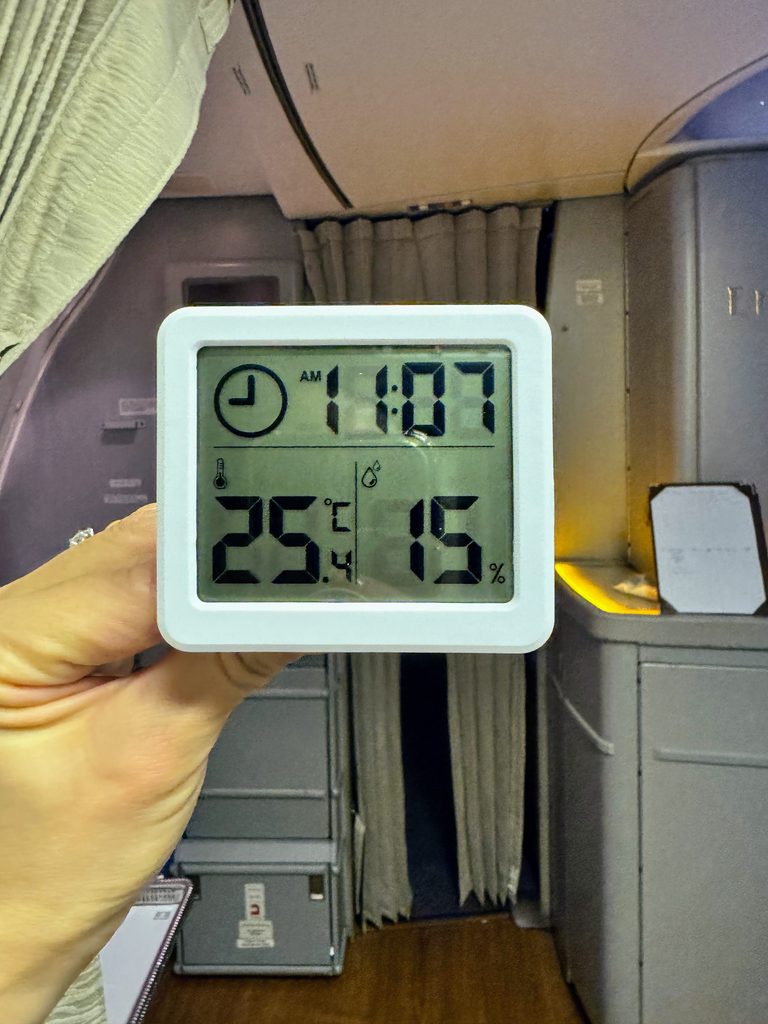
Cabin air is extremely dry, with humidity often below 20%, drier than most deserts.
That’s why you’ll rarely see crew without a water bottle. We kept ours, names written on the side, tucked in the galley and sipped through the whole flight.
Start drinking the day before you fly, and if you’re travelling in Economy, bring an empty bottle through security. On board, don’t be shy: ask the crew to refill it. It’s easier for us too. Just skip the tap in the lavatory; stick to bottled water.
Many crew also carry electrolyte sachets. That headache you blame on altitude? Dehydration could be part of it.
3. Beat jet lag the crew way
Crew don’t get the luxury of adjusting slowly. One week it’s Sydney, the next it’s Paris, so we learned a few tricks fast.
On a short trip of two or three days, many of us simply stayed on home time: sleeping and eating as if we were still in Dubai. On a longer trip, switch to local time the moment you board. Set your watch to your destination and eat and sleep by that clock.
Landing in the morning? Take a short nap, an hour or two at most, then get outside into daylight and stay up until a normal local bedtime. Sunlight is the strongest reset button your body has.
If you have a few days before you fly, shift your bedtime by an hour a day toward your destination’s time zone. You’ll land already halfway there.
4. Pack a carry-on like a crew bag
Crew never fly without an essentials kit, because a delay or a diversion can turn a day trip into a surprise night somewhere. Pack yours the same way: medication in its original packaging, a toothbrush, deodorant, one change of clothes, chargers and anything valuable. If your checked bag goes missing, you can still start your trip.
Power banks belong in your carry-on too, never in checked luggage, and many airlines now ban using them on board. Check your airline’s rules before you fly.
And pack a pen. On every flight with an arrival form, crew lend out pen after pen, and we rarely get them back.
5. Dress like you’re working a long-haul
Crew are on their feet all flight, so we feel warm. You’ll be sitting still, especially at night, so you’ll feel cold. Bring a light layer or a big scarf you can wrap around you; it beats a heavy jumper and works as a blanket too.
Feet swell at altitude, so wear shoes that slip on and off easily. On long-hauls, many crew swear by compression socks.
One crew plea: if you take your shoes off, put them back on before walking to the lavatory. That floor is not as dry as it looks.
6. Think twice before ordering a special meal
Vegetarian, gluten-free, low-sodium, child meals: most airlines need your request at least 24 hours before departure, sometimes more, so add it when you book. A small bonus: special meals are usually served before the main service.
But choose carefully. We often saw passengers who ordered a special meal out of curiosity, then looked longingly at the regular meal cart. Regular meals are loaded based on bookings, so once you’re in the air there may be no spare one to swap. If you have no dietary need, the regular menu is usually the safer bet.
At the Airport and Boarding
7. Respect the size of big hubs
After 18 years based in Dubai, I can tell you: a “short” connection in a mega-hub is never as short as it looks. Moving between concourses can mean a long walk, a train ride and another security check.
As soon as you land, find your next gate on the screens, not just your boarding pass, because gates change. Then go there first and shop later. Gates often close well before departure, and once they close, crew can’t reopen them, no matter how nicely you ask.
8. Show your boarding pass at the door
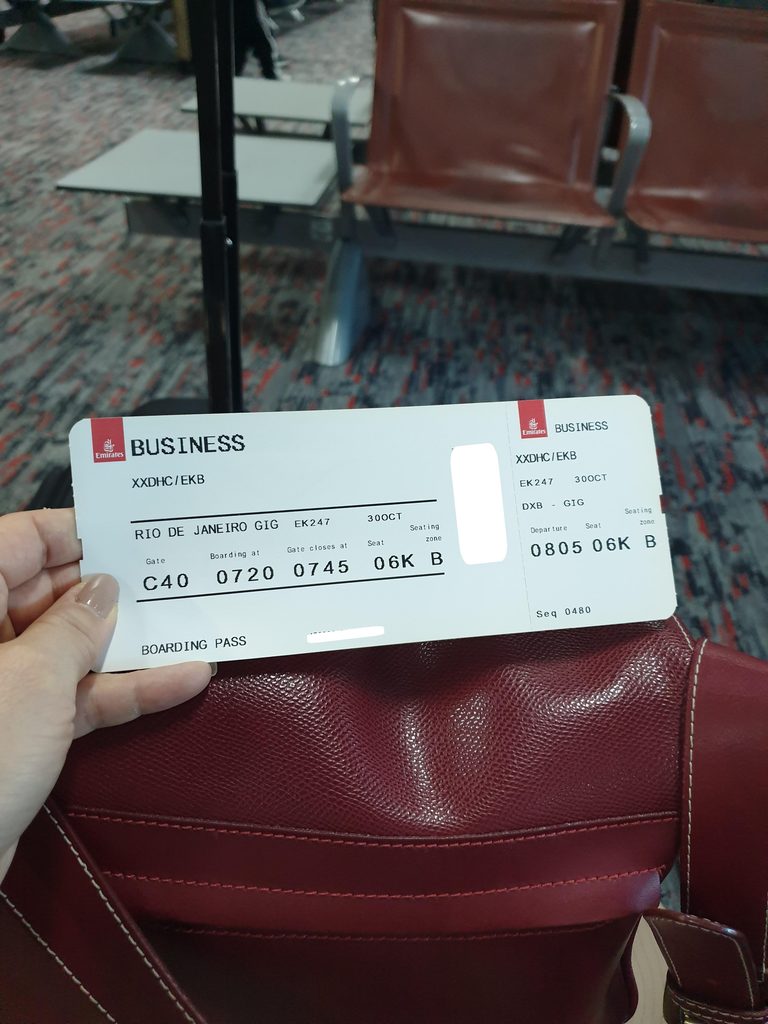
A confession from the aircraft door: few things slow boarding down like the boarding pass. Many passengers walk straight past us with “I know where my seat is,” and some get annoyed when we ask to see it.
I promise, we’re not curious about your seat. We check boarding passes for security reasons: to make sure every person stepping on board belongs on this flight. It’s one of the last checks before the door closes, and we take it seriously.
And mistakes do happen. On a flight from Sydney to Dubai, a passenger who was meant to be flying to Auckland almost boarded our aircraft. On another, from Dubai to Mumbai, a passenger walked on board holding a boarding pass for Chennai. A two-second check at the door saved them both a very long detour.
So have it open on your phone or in your hand as you reach the door. It takes two seconds, and the line moves faster for everyone, including you. And on a big aircraft with two aisles, one glance lets us point you to the right one.
9. Keep your essentials in one pouch
The passenger who stands in the aisle, unpacking a backpack item by item, holds up the whole boarding. Pack everything you need for the flight in one small pouch: headphones, lip balm, eye mask, pen, medication. Lift it out in one go, put it in the seat pocket, and sit down.
It pays off later too. Once the seatbelt sign is on, or your neighbour is asleep, reaching the overhead bin gets much harder.
In the Air
10. Don’t eat if you’re not hungry
On a long-haul, the meals keep coming: dinner after take-off, a snack in the middle of the night, breakfast before landing. Many passengers eat every single one, not because they’re hungry, but because the food is there, it’s free, and they’re bored.
Crew learn quickly not to do this. At altitude, digestion slows down and the gas in your stomach expands, so a heavy meal can leave you bloated and uncomfortable for hours. Most of us ate light and picked at small portions through the flight instead.
If you’d rather sleep through a meal, just skip it; you can still ask for something to eat later. Eating by your destination’s clock, not the cart’s, also helps with jet lag.
11. Keep your seatbelt on, even when the sign is off
When the captain asks the crew to be seated, we stop the service mid-aisle and strap in. That’s your cue that it’s serious, and it also means we can’t come to help you until it’s over.
Clear-air turbulence can arrive with no warning, and most turbulence injuries happen to people who weren’t buckled in. Fasten it loosely over your blanket, so we can see it during our checks without waking you.
12. Move, but pick your moment
Crew walk miles every flight; you should get up too. Walk the aisle and do ankle circles in your seat every hour or two. Long periods of sitting raise the risk of deep vein thrombosis (DVT).
The best time is after the meal service, once the carts are away. Stretching at the back of the cabin is fine, but please avoid standing in the galley while we’re preparing a service.
13. Free drinks are not a challenge
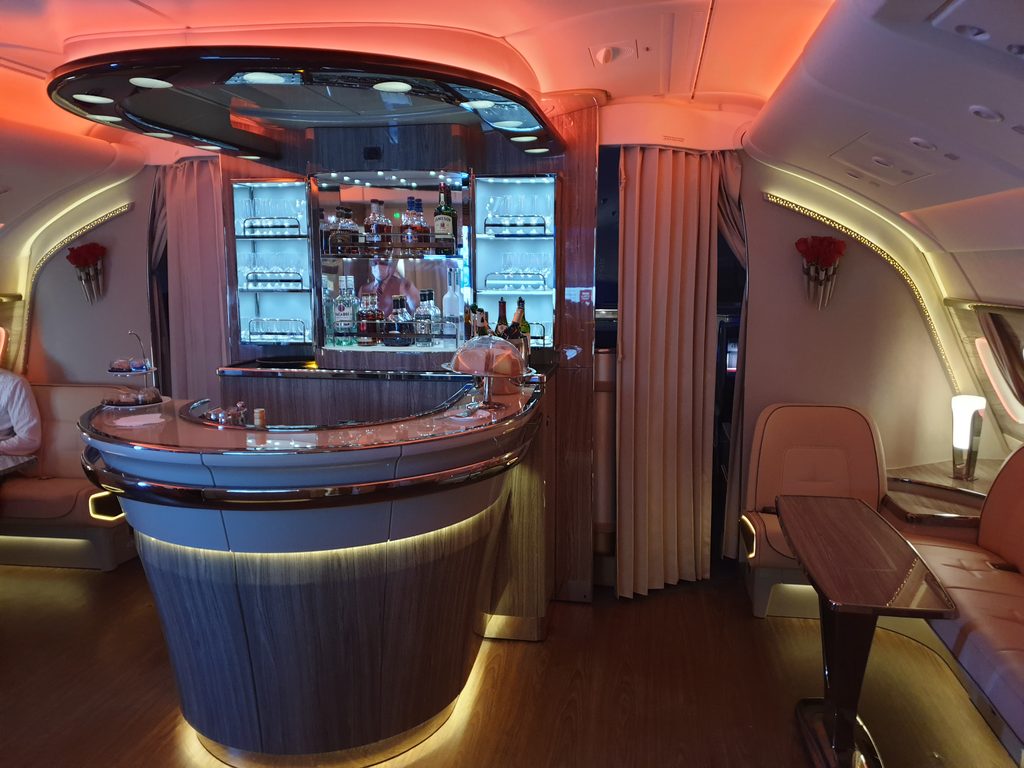
On the airline I flew with, every drink is complimentary in every cabin, wine, beer and spirits included. Some passengers treat that as a challenge. I’ve seen trips ruined before they even began: passengers who started celebrating at the gate, kept going on board, and stepped off hungover and dehydrated, losing the first day of their holiday. In the worst cases, a passenger who becomes disruptive can be offloaded before departure or met by police on arrival.
And yes, we do watch. Crew keep an eye on how much each passenger is drinking, from boarding to the last service. Many people find a drink hits harder in the air, and alcohol dehydrates you on top of already dry cabin air. When someone has had too much, we’re required to stop serving them; it’s not personal, it’s the law on board.
Enjoy a glass with your meal, match every drink with a glass of water, and save the real celebration for when you land.
14. Steal the crew skincare routine
After a long-haul, your skin tells the story of the flight. The crew secret starts from the inside: remember Tip 2, and keep drinking water all flight long. No cream can make up for a dehydrated body.
Then, keep your hands off your face. Between armrests, tray tables and seat pockets, your hands touch more surfaces on a plane than you’d like to think about, and rubbing dry skin only makes it worse.
For hands and lips, nothing beats pawpaw cream. It’s a crew favourite for a reason: one small tube soothes dry lips, cuticles and rough hands, and it fits in any pocket.
If you wear contact lenses, switch to glasses on long flights; dry cabin air makes lenses uncomfortable fast. A long-haul is also the perfect excuse for a no-makeup day.
15. Don’t fly with a heavy cold
I learned this one the hard way. I once worked a flight with a heavy cold because I didn’t want to miss it. On descent, my blocked ears couldn’t equalise the changing pressure. I ended up with ear barotrauma and 16 days off sick. I never flew with a heavy cold again.
If you have a bad cold or an ear infection, consider postponing your flight if you can. If you must travel, ask a doctor or pharmacist whether a decongestant nasal spray is suitable for you, and follow the product instructions. Don’t count on a spray alone to protect your ears.
Stay awake during descent and swallow, yawn or chew gum as the aircraft comes down. If your ears still feel blocked, pinch your nose, close your mouth and blow very gently, without forcing it. For babies, breastfeeding, a bottle or a pacifier during take-off and landing can encourage swallowing.
Crew Etiquette and Landing
16. Return your tray the way you received it
If you’re flying Economy, here’s a small thing that makes a big difference to crew: hand your meal tray back exactly as it came to you.
Many kind passengers try to help by collecting their neighbours’ trays and stacking them into one tall pile. We appreciate the thought, truly. But inside the meal cart, every tray has its own slot, one tray per space. A stack of trays has to be taken apart and sorted again before anything goes back in, and that slows the whole clear-up down.
So leave everything on your own tray, pass it back on its own, and you’ve helped more than you know.
17. Recline slowly, and sit up for meals
You’d be surprised how many arguments on board start with one seat. Reclining is one of the biggest sources of conflict between passengers, and crew are often the ones called in to settle it.
The rule is simple. Outside of meal service, of course you can recline; the seat is designed for it. Just do it slowly. The person behind you may have a drink on their tray table or a laptop open, and a sudden recline can spill the drink or crack the screen.
During meal service, bring your seat upright, even if you’re skipping the meal and trying to sleep. The person behind you still needs room to eat. And for take-off and landing, upright is required; that’s a safety rule, not a preference.
18. Check the seat pocket before you stand
After every flight, crew walk the cabin and find passports, phones, glasses and headphones in seat pockets. And you’d be surprised: even whole cabin bags, left behind in the overhead bins. Once you’ve left the aircraft, you often can’t come back on board to collect them, and the lost-and-found process can take days.
Before you leave, check the seat pocket, under the seat and the overhead bin. Keep your passport and arrival form in a zipped pocket, ready for immigration.
Happy Landings
At the end of every flight, I stood by the door and said goodbye to hundreds of passengers. Some walked off exhausted; others stepped out ready to explore. Now you know what that second group knew.
Flying through Dubai soon? My Dubai layover guide is coming next. Follow along so you don’t miss it.
Got a flight tip of your own, or a question you always wanted to ask cabin crew but never did? Leave it in the comments below and I’ll answer. No call bell needed.